

If you have ever wondered how veneers work or why so many people choose this cosmetic treatment to enhance their smile, you are not alone. Veneers are thin, customised shells placed on the front surface of teeth to improve colour, symmetry, and overall shape. They are designed to look natural and function like natural teeth, enabling you to enjoy a fresher, more balanced smile with long-lasting results.
Understanding how dental veneers work, the differences between porcelain and composite veneers, and what the veneer procedure entails can help you make informed decisions about your oral health and cosmetic concerns. This guide explores the types of dental veneers, the benefits of cosmetic dentistry, the steps involved in tooth preparation, and what to expect before and after your new veneers are fitted.
What Are Veneers and How Do They Work? A Simple Overview of the Veneer Concept
Veneers are ultra-thin shells made from either composite material or porcelain. These custom veneers permanently adhere to the front surface of natural teeth via a strong dental bond. They are designed to correct a wide range of dental concerns, including discoloured, crooked, uneven, broken, worn, misaligned, and misshapen teeth.
Because veneers work by covering the visible front surface of a tooth, they do not replace the underlying tooth. Instead, they blend with existing teeth to create a natural smile that feels comfortable and stable.
Why People Choose Dental Veneers
Dental veneers offer an effective option for anyone wanting to enhance the appearance of their teeth without resorting to more complex orthodontic treatment or invasive cosmetic procedures. Many people choose veneers when whitening treatments cannot lift deep stains or when structural issues affect the appearance of their teeth.
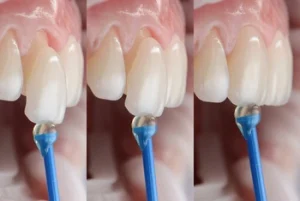 They can improve the appearance of your smile by targeting several cosmetic concerns, such as:
- Teeth that do not respond effectively to teeth whitening treatments.
- Chips, cracks, or broken teeth
- Misshapen teeth or uneven edges
- Mildly crooked teeth or misaligned teeth
- Gaps between natural, healthy teeth
- Worn-down enamel or thinning tooth enamel
Types of Veneers: What Are Your Options?
There are several types of veneers, each suited to different needs and goals. Understanding the difference between composite veneers, porcelain veneers, and temporary veneers helps you choose the right path for your new smile.
Porcelain Veneers
Porcelain veneers are traditional porcelain veneers crafted in a dental lab. They are known for being stain-resistant, strong, and natural-looking. These veneers are thin yet durable, making them ideal for long-term cosmetic treatment. They require tooth preparation, which involves removing a small amount of natural tooth enamel to ensure the veneer fits comfortably and looks seamless.
Composite Veneers
Composite veneers and composite resin veneers are made from composite material, shaped and applied directly to the tooth surface. They offer a quicker and more cost-effective cosmetic dentistry option, although they may not last as long as porcelain.
Temporary Veneers
Before your custom veneers are made, temporary dental veneers may be placed on your teeth. These protect the underlying tooth and help you preview the appearance of your teeth while the dental laboratory designs your final veneers.
How Do Veneers Work Step by Step?
Understanding how veneers work becomes much clearer when you break the veneer procedure into simple, sequential stages. Each step plays a role in creating custom veneers that blend naturally with your existing teeth and support long-term oral health. From the initial consultation to the bonding process and follow-up appointment, the journey is designed to be structured, minimally invasive, and tailored to your cosmetic concerns.
Step 1: Your Initial Consultation
The veneer procedure starts with an initial consultation. During this visit, your cosmetic dentist evaluates your existing teeth, oral health, risk of gum disease, and suitability for veneers. Photographs, scans, and discussions about your cosmetic concerns help your dentist design a treatment plan.
If you have gum disease or unresolved dental health issues, these need to be treated before starting the veneer procedure.
Step 2: Planning Your New Smile
Once veneers are confirmed as suitable, planning begins. Your dentist assesses tooth shape, facial proportions, bite alignment, and how veneers will enhance the appearance of your smile. You may view a mock-up to understand how your custom veneers will look.
Step 3: Tooth Preparation
Tooth preparation is a key step in how veneers work. A small amount of natural tooth enamel is trimmed to make room for the custom-made shells. This ensures the veneers look realistic and do not appear bulky.
Tooth preparation is a minimally invasive step, but it makes the procedure irreversible. Once enamel is removed, it does not grow back, and the teeth will always need veneers or another form of coverage.
Step 4: Temporary Veneers
After tooth preparation, temporary veneers protect the underlying tooth while your new veneers are made at a dental laboratory. Temporary veneers allow you to adjust to the look and feel of the cosmetic treatment.
Step 5: Creating Your Custom Veneers
Your dentist sends impressions or digital scans to a dental lab, where technicians design custom veneers that match your natural teeth. This ensures your veneers match your natural tooth structure, colour, and bite.
Step 6: The Bonding Process
When your new veneers arrive, they are placed using a bonding process that involves dental cement. The dentist checks the fit, shape, and colour before permanently attaching them to the front surface of your teeth. Once bonded, they feel secure and operate like natural teeth.
Step 7: Follow-Up Appointment
A follow-up appointment is often scheduled to ensure your veneers are settling well and your bite feels comfortable. Your dentist checks the surrounding gum tissue, oral hygiene habits, and overall comfort.
What Do Veneers Help With?
Veneers can address several cosmetic concerns and improve the appearance of your teeth in a straightforward way. They offer solutions for issues related to colour, shape, size and minor alignment.
Improving Colour and Brightness
Veneers are often used when teeth whitening cannot correct deep intrinsic stains. Because veneers cover the front surface of teeth, they can create a more uniform colour that looks natural and bright.
Correcting Shape and Symmetry
If you struggle with misshapen, uneven, or worn teeth, veneers effectively restore symmetry and create a balanced new smile.
Enhancing Alignment
Veneers can improve the look of mildly crooked teeth and small gaps without orthodontic treatment. However, severe misalignment often requires braces or clear aligners before veneer placement.
Repairing Structural Damage
Veneers can help with chipped, cracked, or broken teeth by protecting the underlying tooth and enhancing its appearance.
What Happens Under the Veneers?
Veneers only cover the front surface of teeth, leaving the underlying tooth intact. The underlying tooth remains functional as long as oral hygiene is maintained and the veneer stays securely bonded.
However, it is important to understand that this is an irreversible procedure because the enamel removed during tooth preparation cannot be restored. This means veneers need to be replaced when they wear down or if damage occurs.
Maintaining Your Veneers for Long-Lasting Results
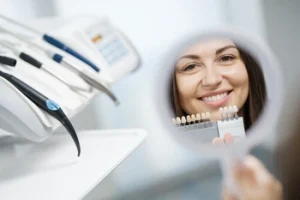 To prolong the lifespan of your veneers and protect your natural teeth, good oral hygiene is essential. This includes:
- Brushing twice daily
- Flossing regularly
- Attending regular dental appointments
- Avoiding chewing on hard items
- Reducing staining foods and drinks
- Minimising cold foods if you experience sensitivity
Porcelain veneers generally last longer than resin veneers or composite veneers. Over time, veneers may need replacement as a result of wear, chipping or changes in gum position.
Are You a Good Candidate for Veneers?
Not everyone is an eligible candidate for dental veneers, so a thorough assessment helps determine whether the treatment is suitable for your goals and oral health. Your dentist evaluates the condition of your natural teeth, gum health, enamel thickness and any current dental concerns during the initial consultation.
Healthy tooth enamel is important because a small amount must be removed during tooth preparation for the veneers to fit properly. If the enamel is too thin or if the underlying tooth is significantly weakened, veneers may not offer the best long-term solution.
Gum disease must also be treated before starting the veneer procedure. Inflammation or infection around the gums can affect the bonding process and the stability of new veneers. Addressing gum health first ensures that the treatment is carried out on a stable foundation.
Lifestyle factors also play a role. People who clench or grind their teeth may need a protective night guard to reduce the risk of chipping. Those who prefer low-maintenance options may lean toward porcelain veneers due to their stain-resistant qualities.
Expectations are important as well. Veneers can enhance the appearance of your smile, but they do not completely change the structure of teeth or correct severe misalignment. Understanding the capabilities and limitations of veneers helps you make an informed decision.
How Veneers Compare to Other Cosmetic Procedures
Although veneers are a well-known cosmetic option, they are not the only treatment available for improving the appearance of your teeth. Comparing veneers with other procedures helps you understand when veneers are appropriate and when alternative treatments may offer better outcomes.
Teeth whitening is commonly chosen for discoloured teeth, but it cannot change the shape or alignment of teeth. Whitening treatments also do not correct chips, worn edges or uneven surfaces. Veneers may be recommended when deeper stains or structural issues affect the appearance of your teeth.
Dental bonding uses composite material to rebuild chipped or uneven teeth, but it is generally suited to minor changes and does not provide the same level of durability or stain resistance as porcelain veneers.
Crowns provide full coverage for teeth with significant structural damage. While veneers cover only the front surface, crowns surround the entire tooth, making them more suitable when the underlying tooth needs reinforcement rather than cosmetic enhancement alone.
Orthodontic treatment, such as braces or clear aligners, may be advised for moderate to severe misalignment or bite issues. Veneers can improve the look of mildly crooked teeth, but they cannot change bite alignment or correct significant spacing issues.
Each option serves a different purpose, and the most suitable treatment depends on whether your goal is cosmetic enhancement, structural repair or improved alignment.
What Veneers Cannot Fix?
Veneers offer a versatile cosmetic option, but they do have limitations. They are not designed to correct severe misalignment or major bite issues. When teeth are significantly rotated, crowded or positioned incorrectly, orthodontic treatment may be necessary before considering veneers.
Veneers also cannot treat dental health problems such as decay, infections or active gum disease. These conditions must be addressed before the veneer procedure begins to ensure a stable foundation for long-term results.
If the underlying tooth structure is weak, fractured or has extensive restoration, veneers may not provide adequate support. In such cases, crowns or other restorative treatments may be more appropriate for protecting the tooth.
Severe enamel loss can also limit the success of veneers. Since veneers rely on natural tooth enamel for bonding, extremely thin or worn enamel may prevent proper attachment.
Additionally, veneers do not significantly change tooth width or alter bite mechanics. If your cosmetic concerns relate to jaw alignment, bite function or major structural changes, other treatments may be required to achieve your goals.
Common Myths About Veneers
Many people consider veneers but hesitate because of misunderstandings about how they work and what the treatment involves. Clearing up these common myths helps you make informed decisions and understand what veneers can realistically achieve.
Do veneers damage natural teeth?
No. Veneers require removing only a thin layer of natural tooth enamel to allow the custom-made shells to fit properly. This preparation is minimal and designed to preserve as much natural tooth structure as possible.
Do veneers look unnatural?
They do not have to. Porcelain veneers and composite veneers are crafted to match the colour, translucency and texture of natural teeth. When designed with precision, they blend smoothly with your existing teeth and enhance the appearance of your smile.
 Are veneers fragile?
 Are veneers fragile?
Veneers are more durable than many people assume. Porcelain veneers and well-made composite resin veneers withstand normal chewing forces when supported by healthy underlying tooth structure. While they can still chip if exposed to excessive force, they are not as delicate as commonly believed.
Do veneers eliminate the need for oral hygiene?
No. Veneers cover only the front surface of the tooth, which means the remaining natural tooth and surrounding gums still require good oral hygiene. Regular dental appointments, brushing and flossing remain essential for maintaining long-term dental health.
Are veneers only for cosmetic purposes?
Not always. While veneers improve the appearance of your teeth, they can also protect worn teeth, strengthen chipped edges and support overall tooth structure when used appropriately.
Do veneers stain easily?
Porcelain veneers are stain-resistant. Composite veneers may stain over time, but can be polished or replaced as needed. Good oral hygiene and sensible food choices help maintain their appearance.
Final Thoughts: How Do Veneers Work to Create a Natural Smile?
So how do veneers work in everyday life? Veneers are thin coverings placed on your teeth to enhance function and appearance. Through careful planning, minimally invasive tooth preparation, temporary veneers, custom lab creation, and a strong dental bond, the veneer procedure produces a natural smile that blends seamlessly with your facial features.
With good oral hygiene and regular check-ups, veneers can deliver long-lasting improvements to the appearance of your smile while protecting the natural tooth structure beneath. If you are considering veneers and want guidance tailored to your needs, you can book a consultation with The Smile Workx at (07) 5300 2133 for personalised advice and treatment planning.
References
Healthdirect Australia. (2025, February). Gum disease. Retrieved from https://www.healthdirect.gov.au/gum-disease
Larson, J. (2019, October 23). Composite veneers: Pros & cons, procedure, cost, and alternatives. Healthline. Retrieved from https://www.healthline.com/health/composite-veneers
NHS. (2025, August 19). Teeth whitening. Retrieved from https://www.nhs.uk/tests-and-treatments/teeth-whitening/
FDI World Dental Federation. (n.d.). How to practice good oral hygiene. Retrieved from https://www.fdiworlddental.org/how-practice-good-oral-hygiene
Cleveland Clinic. (2022, July 18). Veneers: What are dental veneers? Cost, procedure & advantages. Retrieved from https://my.clevelandclinic.org/health/treatments/23522-dental-veneers